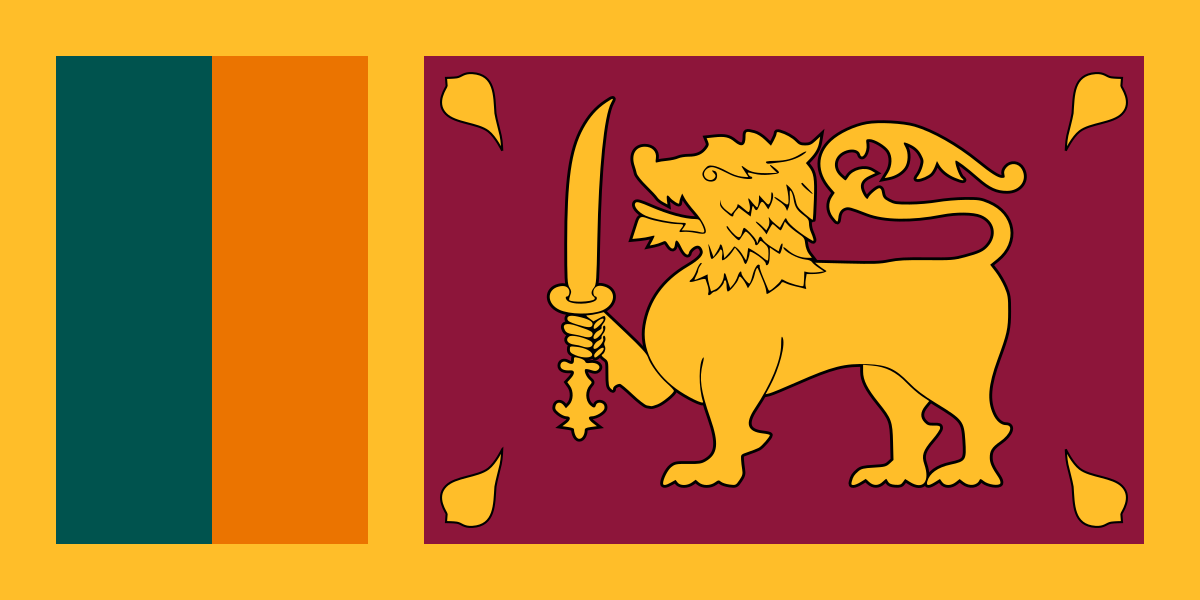
South Asians are individuals from the region known as South Asia, which includes the countries of India, Pakistan, Bangladesh, Sri Lanka, Nepal, Bhutan, and the Maldives. This region is home to over a quarter of the world's population and is one of the most culturally and historically rich parts of the globe. The term "South Asian" represents a broad and diverse community that, despite its vast internal differences, shares certain cultural, historical, and linguistic connections that shape its identity on a global stage.
The diversity of South Asia is one of its most defining features. The region is home to hundreds of languages and dialects, multiple religions such as Hinduism, Islam, Buddhism, Sikhism, Christianity, and Jainism, and countless ethnic and tribal groups. Each country within South Asia has its own unique national identity, yet there are shared traditions, values, and experiences that bind South Asians together. Music, dance, cuisine, art, and literature are deeply ingrained in everyday life, with traditions often passed down through generations. Whether it’s the colorful celebration of Holi, the sacred observance of Ramadan, or the peaceful chants of Buddhist monks in the Himalayas, South Asian culture reflects deep spirituality, unity in diversity, and a strong sense of community.
Historically, South Asia has played a central role in global civilization. The Indus Valley Civilization, one of the world’s oldest urban cultures, flourished here thousands of years ago. The region gave birth to major world religions, philosophical ideas, and scientific innovations. The influence of empires such as the Mauryas, Guptas, Mughals, and the British Raj shaped the political and cultural landscape over centuries. Colonization, particularly under British rule, had a lasting impact on South Asia, influencing its education systems, governance, language, and socio-political movements. The fight for independence, led by figures such as Mahatma Gandhi and Muhammad Ali Jinnah, was a powerful testament to the resilience and unity of the people.
In modern times, South Asians have become a significant global diaspora. Millions have migrated to different parts of the world—North America, the UK, the Middle East, Southeast Asia, and beyond—contributing to their new communities in meaningful ways. South Asians have made their mark in fields such as technology, medicine, business, politics, sports, and the arts. Names like Malala Yousafzai, Kamala Harris, Mindy Kaling, and Satya Nadella reflect the global impact of South Asian talent and leadership. While many in the diaspora maintain strong ties to their cultural heritage, they also adapt and evolve, creating dynamic blends of tradition and modern identity.
Family and community play a central role in South Asian life. Respect for elders, strong family bonds, and the importance of education are core values that guide many South Asian households. Weddings and festivals are often grand, vibrant affairs that showcase the richness of the culture, filled with music, dance, food, and rituals. South Asian cuisine, known for its spices, flavors, and regional variety, is enjoyed across the world—from biryani and butter chicken to dal, dosa, and samosas.
However, like any region, South Asia faces its share of challenges. Poverty, political conflict, gender inequality, and environmental concerns are ongoing issues. Despite this, the people of South Asia continue to show resilience, innovation, and a strong sense of identity. Social movements, education reforms, and youth leadership are driving positive change and shaping a new future for the region.
In essence, to be South Asian is to belong to a heritage that is rich, complex, and deeply rooted in history. It is a proud identity carried by billions across borders, generations, and experiences. The South Asian story is one of beauty, strength, struggle, and hope—a continuing journey shaped by its past and driven by its dreams for the future.
FAQS
**Q1: What are some common cultural elements shared among South Asians?**
**A* Despite the diversity within the region, many South Asians share cultural elements such as a strong emphasis on family, respect for elders, vibrant festivals, traditional clothing like sarees and kurtas, and cuisines rich in spices and flavor. Music and dance are also important, with classical forms like Bharatanatyam, Kathak, and folk traditions celebrated across countries.
**Q2: How do South Asians contribute to global society today?**
**A* South Asians contribute significantly in many fields worldwide, including technology, medicine, academia, politics, arts, and sports. The diaspora plays an essential role in shaping multicultural societies, bringing unique perspectives, s****s, and a rich cultural heritage that enhances the